



The Rise of “Professor Jiang” and the Art of Attentional Capture
“Whoever controls the media, controls the mind.” — Jim Morrison, The Doors (1969)
We want to believe media simply informs. It doesn’t. Government and media share a special relationship and the same goal: steering – guiding behavior, shaping choices, controlling a population’s direction. The word comes from Latin gubernare (to pilot a ship). But what if the ship is the human mind? Then governing becomes mental navigation – “govern mente” – not as etymology but as a truth: those who steer the state also steer what you think.
Have you noticed how certain people and ideas seem to appear out of nowhere, rising to prominence with breathtaking speed?
Consider the Chinese‑Canadian commentator Jiang Xueqin, known online as “Professor Jiang.”
His story: born in 1976 in Taishan, Guangdong. At six, his family moved to Toronto. They were poor. Rejected by MIT, Princeton, and Harvard, he won a scholarship to Yale, graduating in 1999 with a degree in English literature. He worked as a journalist for the Christian Science Monitor and the Far Eastern Economic Review. In 2002, he was arrested in China while filming a PBS documentary, then expelled. Later, he worked for the United Nations in Afghanistan. A curious path.
Then he was welcomed back into China as an educator: deputy principal at Shenzhen Middle School, head of the international division at Peking University High School, and teacher at schools connected to Tsinghua University. Since 2022, he has taught Western philosophy at a private Beijing school called Moonshot Academy.
The title “Professor” is mostly for his YouTube channel – he has no university position or advanced degree. His channel, Predictive History, uses game theory and historical patterns to predict world events. The media nicknamed him “China’s Nostradamus” after he correctly predicted Donald Trump’s 2024 election win and the U.S.–Iran war.
My son first showed me a Jiang video on TikTok. I found him articulate and smart, watched more interviews, found his YouTube channel, and started following his classes – genuinely fascinating.
But he does not get everything right. Recently he suggested that European elites – specifically Jewish and German figures – are tearing down the post‑WWII international system. When I heard that, I stopped. I knew it could not be true. Israel’s independence was part of that postwar settlement; the 1947 UN Partition Plan created Israel. Jewish political hopes were recognized by the very system Jiang claims these elites want to destroy.
Given his intelligence and historical knowledge, how could he not know that American Jews – the largest, most powerful Jewish community outside Israel – have been among the strongest supporters of the postwar liberal order? Yes, they helped build Hollywood. But also law firms, banks, universities, and civil rights organizations. The numbers are striking: Jews are 2.4% of the U.S. population, yet roughly 30% of professors at elite universities, 40% of partners at top law firms, and 25% of Forbes billionaires. Why would a group that has thrived under the postwar order want to tear it down?
Let me complicate my own argument. There might be a small piece of uncomfortable truth hidden inside his blame claim. The post‑WWII order – the UN, the World Bank, global trade rules – was designed by Western powers, many of them American and European elites from various backgrounds. That system has always worked better for some than for others: it has taken wealth from poorer countries, kept them in debt, and concentrated power. So the idea that some of those same elites might now be quietly dismantling the system is not crazy – not because of a secret plot, but because they have gotten what they wanted and are ready to move on. That is how power works.
The real problem with Jiang is not that he asks whether the system is crumbling. It is that he blames ethnicities instead of systems or institutions. He turns a legitimate question about power into an ugly attack on a people – the blame game. But the honest truth is that the postwar order will not last forever, and the people who built it may also bury it. That idea deserves a fair look – not mindless defense.
So here is the tension: Jiang sees something real – the system is crumbling – but he blames ethnicities as villains. That is not naming the system’s real problems. That is steering – as in sheep. He is setting up fall guys for something coming down the road. And that made me wonder: Is Jiang a CIA operative? I started looking for the “prophet pattern.”
The Prophet Pattern
Compare Jiang to Peter Zeihan. Zeihan is a geopolitical analyst who used to work as a contractor for the U.S. State Department. Like Jiang, he made bold public predictions. In his 2014 book The Accidental Superpower, he argued that Russia’s shrinking population meant its window for military action was closing – and specifically predicted that Russia would invade Ukraine. When the full‑scale invasion happened in February 2022 – eight years later – Zeihan’s old book suddenly looked brilliant. He went viral. I fell for his ideas at first – they seemed fresh and smart, a way to see the world through geography and birth rates.
But then I noticed something: Zeihan wasn’t just explaining the world. He was twisting it. He kept telling us Russia was a hollow “paper bear” that would collapse any minute, that Russian society would not survive the war, that oil exports would drop by half, that pipelines would explode and take decades to fix. None of that happened. The war became a long, grinding stalemate, and India and China simply stepped in to buy the Russian oil Zeihan said would disappear.
His bias against China was even worse. For more than ten years, Zeihan has predicted China’s collapse, arguing its demographics are the worst in history and that China “won’t be a functional nation by 2030.” But since that prediction, China’s economy has grown from about $4.5 trillion to $18 trillion. One critic called Zeihan “the Jim Cramer of geopolitics” – famous for being wrong so often that smart listeners do the opposite.
Jiang’s rise followed the same pattern. He predicted Trump’s win and the Iran war; both came true. Overnight he became “China’s Nostradamus,” appearing everywhere from TikTok to Tucker Carlson’s show. Both men made one big correct prediction, earned a platform, then used it to push claims that didn’t hold up. Zeihan said Russia would quickly fail and China collapse – neither happened. Jiang claimed Jewish and German elites are dismantling the postwar order when they largely built it. The pattern is the same: earn trust with a unique slant on truth, then use that trust to sell falsehoods.
Now think about timing. Zeihan became famous during the Ukraine war, when Western audiences were confused and desperate for explanation. Jiang became famous during the chaos after Trump’s return and the Iran crisis. In both cases, the public was scared, confused, and hungry for certainty – the perfect moment for attentional capture. A magician does not perform in a quiet room; he performs when you are already distracted.
Could this be coincidence? Maybe. But think about what intelligence agencies actually do. One of their oldest tricks is to insert an agent into a moment of crisis, feed the public a mix of truth and lies, let the truth open the door for the lies. The agent does not need to convince everyone – just capture your attention, keep you arguing about his claims or defending his targets, instead of looking somewhere else.
A Short History of Intelligence and Attention
To understand what might be happening, we first need to see how U.S. intelligence has long operated. They don’t always steal secrets; sometimes they steal attention.
The most famous example is Operation Mockingbird. During the Cold War, the CIA secretly hired hundreds of American journalists and editors, placing them inside major news organizations like The New York Times, Time, and The Washington Post to shape what Americans read. CIA officer Frank Wisner called this propaganda machine “the mighty Wurlitzer” – it could play any song the agency wanted.
But Mockingbird was not alone. There was MKUltra (1953–1973), a secret CIA program that explored psychological manipulation through LSD and other drugs on unknowing subjects, aiming for mind control. It achieved little practically, but it shows how far intelligence agencies were willing to go.
The U.S. also manipulated culture. The Congress for Cultural Freedom was secretly funded by the CIA through fake organizations, sponsoring magazines, conferences, and intellectuals worldwide – shaping not just what people thought, but what they thought was worth thinking about. Even Hollywood got involved: from WWII through the Cold War, the U.S. government worked with movie studios to make propaganda films, reviewing and changing scripts to fit official stories.
Behind many of these operations were private foundations, especially the Rockefellers. The Rockefeller Foundation provided cover money for MKUltra; the Ford Foundation passed CIA money to the Congress for Cultural Freedom. This public‑private partnership allowed the U.S. to fight a massive information war while keeping its hand hidden.
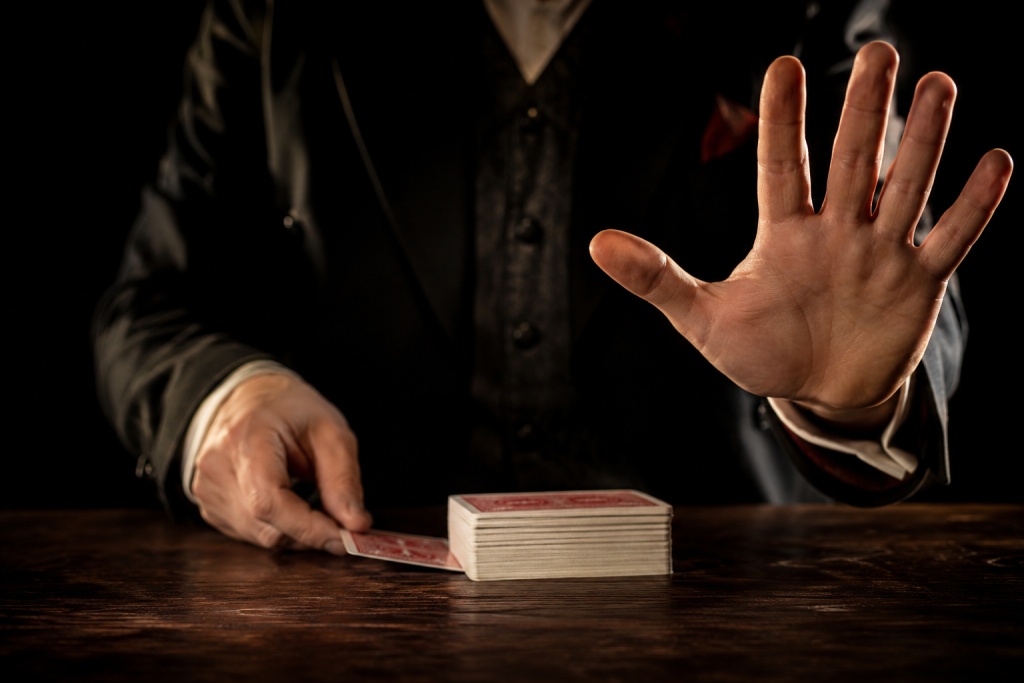
The key takeaway is not that every commentator is a CIA agent. It is that the U.S. intelligence community has a long, well‑documented history of using media and culture to control what the public sees and thinks. They understand a simple psychological rule: attentional capture. When something grabs your attention, your focus shifts without you noticing. You chase the shiny object. You argue against a false claim. You defend a position never really under attack. Meanwhile, what you are not looking at goes unnoticed – the magician’s oldest trick. The left hand waves; the right hand changes the deck.
What Is Jiang Really Trying to Do?
So maybe Jiang is not simply mistaken. If he is an intelligence agent designed to throw people off, his falsehoods serve a specific psychological purpose: attentional capture. And if that is the game, it is up to us to use his blatant falsities to figure out what he is pulling our attention away from – and what he wants to do with it.
Consider a subtle psychological trick: maybe Jiang does not want to tear down the postwar order. Maybe he wants his followers to defend it – without ever questioning. He points at Jewish and German elites as destroyers. You trust him because of his accurate predictions, and you jump to defend the system. Do you see what just happened? You never stopped to ask: Is this system actually good for me? Who built it? Who benefits? You are too busy being angry at alleged conspirators to notice you have been herded into defending something you never examined. Jiang never has to say, “Defend this system.” He simply creates a threat, and your protective instincts do the rest – a classic “rally around the flag” trick with an ethnic scapegoat. Your energy goes into preserving the status quo, and you feel like a critical thinker because you think you are “seeing through” a conspiracy. In reality, you have been tricked into defending the very system that Jiang – or the intelligence group he serves – wants you to keep in place.
What Jiang Is Actually Doing (For Most Listeners)
Most people have no prior knowledge to push back. They hear a charming, well‑spoken “professor” claim that Jewish and German elites are secretly trying to destroy the postwar order. It sounds smart, like secret knowledge. And because Jiang already proved himself with correct predictions, they trust him. They absorb the lie without resistance. Then, without ever questioning the system, they start blaming the scapegoated group. They become defenders of the status quo, but they think they are being critical thinkers.
This is the real danger. Jiang is not trying to make informed people defend the truth. He is trying to make uninformed people absorb a lie that turns them into defenders of the existing order. Informed people who argue against him are just side effects – their debates create engagement, boost his reach, and bring in more uninformed listeners. The pattern is simple: earn trust with undeniable truths; use that trust to inject a false claim blaming a group; uninformed people absorb the lie and become defenders of the system; informed people argue, creating controversy that amplifies the platform. Repeat.
Two Actors, One Playbook
Don’t be fooled. Zeihan and Jiang are not just confused commentators – they are well‑credentialed operators. Zeihan spent more than a decade as a geopolitical analyst at Stratfor, rising to Vice President. He knows how to read a room and shape a story. Jiang is a Yale‑educated educator running a YouTube channel with millions of views. He understands history, persuasion, and the power of a good story. But their expertise does not come from a neutral desire to be right; it comes from deep strategic interests.
Zeihan sells a pro‑American, anti‑enemy worldview: the West, with its geography and energy independence, is destined to win; everyone else – especially Russia and China – is doomed. This is not analysis. It is a comforting bedtime story for Westerners scared of a multi‑polar world.
Jiang is doing something different. To be honest, I am not entirely sure what yet – I have not listened to enough of his interviews. Maybe it has to do with how the current war ends and shakes the world. By pointing at Jewish and German elites as would‑be destroyers, he turns his audience into defenders of the status quo without them realizing it. From the point of view of a geopolitical rival, this is useful: a Western public busy defending its own system and blaming ethnic groups is not asking hard questions about that system’s flaws, origins, or beneficiaries.
If these men are indeed agents in an information war, their timing was perfect. Zeihan appeared during the fog of the Ukraine war, when Western audiences were desperate for answers. His message – “Don’t worry, Russia and China are about to collapse on their own” – made people complacent and overconfident, distracting them from real policy failures. Jiang appeared during the chaos after Trump’s return and the Iran crisis. His approach is more subtle: as far as I can tell, he defends the postwar order without your realizing it, steering you away from questioning the system. In both cases, the public’s attention was captured and thrown off track.
Learning the Hard Way: A Path Forward
So how do we deal with this? Learn things the hard way. Practice the art of truth weaving, as I am trying to do.
First, reject the lazy either‑or thinking that has become common since the COVID era – that you must either accept someone’s entire worldview or dismiss them completely. We have been conditioned to throw out the whole person whenever we discover a flaw. Fact‑checking, character attacks, and social media outrage reinforce this habit. That is the easy path – but it leads to intellectual ruin. The harder path requires courage, effort, humility, and admitting that we do not have the full picture.
I enjoy many of Professor Jiang’s YouTube classes and will continue to watch them. He has taught me genuinely interesting things about history and strategy. He has also said plenty that struck me as a twist on reality – ideas I recognized, questioned, and set aside. I am not afraid to be misled or wrong, because my curiosity and developing critical thinking skills are teaching me how to navigate this new world. If I am wrong about Jiang, time will reveal it. For now, this essay is my attempt to reveal how these patterns work.
But the larger point is not whether Jiang is a CIA operative. It is that media exposure is rarely accidental. In the system of control we live in, attention is allocated strategically. If powerful institutions – intelligence agencies, corporate owners, political networks – did not want you to hear Jiang’s message, he would never have risen to stardom. His sudden, algorithm‑powered ascent would have been suppressed.
There is a term for this phenomenon: controlled opposition. An actor appears outside the mainstream, even critical of it. They speak with apparent independence and attract audiences distrustful of official narratives. But their criticism never cuts too deep. They attack safe or useful targets and defend deeper structures of power without their audience noticing. They create the illusion of dissent while steering people away from genuine threats to the established order.
Jiang fits this pattern. He sounds like a rebel and makes predictions that upset conventional wisdom. But his most controversial claim – that Jewish and German elites are dismantling the postwar order – does not threaten power; it protects it. It channels outrage toward a scapegoat and leaves the system untouched. That is controlled opposition: the appearance of rebellion without the reality of resistance.
I am not trying to steer you away from Jiang. On the contrary, I encourage you to listen to him yourself. The only way to develop genuine critical thinking is to expose yourself to ideas that challenge you, force you to think, and demand that you separate insight from persuasion. This is a skill you must develop through trial and error. Following someone is not a quick fix. If you let AI and certain media personalities think for you, you will regret it later. Never outsource your curiosity.
Here is the spiritual angle: humility is a curious thing – literally. To dismiss someone out of laziness or arrogance is to lack survival intelligence of the most critical kind. It locks you inside a prison of your own making. Every person sees the world through a unique set of experiences. The only way to connect to that world or person is through curiosity. Kill curiosity, and you kill relationships. Narcissists are not curious.
In an age where many people are focused on themselves, we often act as if we already know everything we need to know, treating others like annoying insects. We listen only when they tell us what we already believe. That is a colossal mistake – especially at this moment in history. It is not just foolish; it is dangerous.
No one sees the whole picture alone. We need other people precisely because they see things we do not. It is simply foolish to think we must agree with everyone on everything. So what if Jiang is a CIA operative? He will only hold an audience if he has interesting things to say. Curiosity, fresh perspectives, and diversity go hand in hand. Different people bring different ideas – and we can learn and grow from them. When we put those perspectives together, we get a fuller picture. That is how we build something worthwhile.
The wise approach is to be a filter, not a sponge. Take the truth wherever you find it – the facts, the historical patterns, the useful insights – and discard the manipulation, exaggerations, and stories designed to steer your thinking. You will not get it right every time, but you will learn the art of truth weaving if you keep practicing. Truth weaving starts with a posture, a way of thinking that recognizes every person, including yourself, understands only a fragment of a much larger reality.
The magician’s goal is to control where you look. The truth weaver’s goal is to watch the whole room. That is the only way to see the deck change.


 “Outstanding, sophisticated, and mesmerizing…a spiritual intrigue similar to Dan Brown’s The Da Vinci Code.” —ForeWord Reviews