Category: Economy
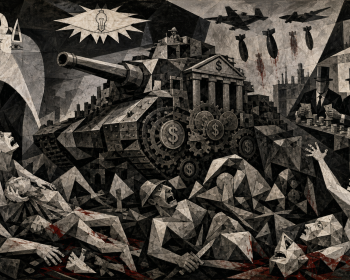
The Naked Emperor: Anatomy of the Fiat Empire
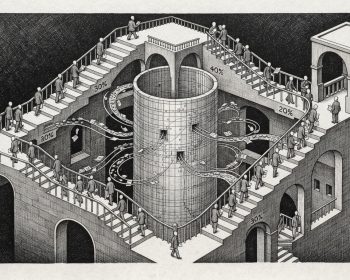
The Tower They Built: How Real Estate Became the World’s Biggest Bubble
A Three-Part Mini-Series — Part Two “Come, let us build ourselves a city and a tower with its top in the heavens.” — Genesis 11:4 Every tower begins with a promise. People surrender tangible wealth—time, money, labor, health—in exchange for the promise of something greater. This essay traces one of…
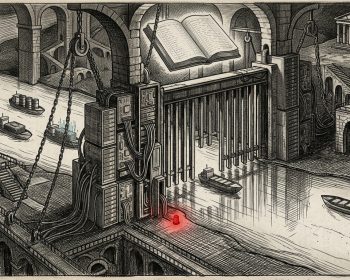
Looking Back: The Checkmate We Saw Coming
They Study You: What the Builders Know About Human Nature
A Three-Part Mini-Series — Part One “They know us better than we know ourselves. That should frighten you.” — Shoshana Zuboff, Author of The Age of Surveillance Capitalism Doesn’t it give you the creeps—that you’re being studied by the minute? Right now, somewhere yonder, a server is coalescing around your identity—your name,…
Four Wounds of the Western Mind
Let it Fall: Why a Real Reset Might Be the Only Way Young Adults Can Start
“Out of clutter, find simplicity. From discord, find harmony. In the middle of difficulty lies opportunity.” — Albert Einstein My oldest son graduated with honors in mechanical engineering in May 2025—and still doesn’t have a full-time job. He moved back home and spends his days sending out applications between rebuilding…
From Gold to Code—and Back Again
Parallels Between 1929 and Today’s Financial Fragility “The only thing we have to fear is fear itself.” – Franklin D. Roosevelt, 1933 In the final months of 1929, America looked unstoppable. Cities glowed with electric light. Streets swarmed with automobiles. Radios carried jazz, ball scores, and a steady stream of…
Houses Rot, Markets Fall: Unlearning the Real Estate ‘Truth’
Gain-of-Function Economics: The Fed’s Century of Engineered Fragility
“Paper money eventually returns to its intrinsic value: zero.” — Voltaire Last week, I read Scott Bessent’s paper, “The Fed’s ‘Gain of Function’ Monetary Policy,” which presents a striking critique of the Federal Reserve’s unconventional monetary strategies. Bessent argues that over the past decades—particularly following the 2008 financial crisis—the Fed has engaged…
The Naked Emperor: Anatomy of the Fiat Empire
The Tower They Built: How Real Estate Became the World’s Biggest Bubble
A Three-Part Mini-Series — Part Two “Come, let us build ourselves a city and a tower with its top in the heavens.” — Genesis 11:4 Every tower begins with a promise. People surrender tangible wealth—time, money, labor, health—in exchange for the promise of something greater. This essay traces one of…
Looking Back: The Checkmate We Saw Coming
They Study You: What the Builders Know About Human Nature
A Three-Part Mini-Series — Part One “They know us better than we know ourselves. That should frighten you.” — Shoshana Zuboff, Author of The Age of Surveillance Capitalism Doesn’t it give you the creeps—that you’re being studied by the minute? Right now, somewhere yonder, a server is coalescing around your identity—your name,…
Four Wounds of the Western Mind
Let it Fall: Why a Real Reset Might Be the Only Way Young Adults Can Start
“Out of clutter, find simplicity. From discord, find harmony. In the middle of difficulty lies opportunity.” — Albert Einstein My oldest son graduated with honors in mechanical engineering in May 2025—and still doesn’t have a full-time job. He moved back home and spends his days sending out applications between rebuilding…
From Gold to Code—and Back Again
Parallels Between 1929 and Today’s Financial Fragility “The only thing we have to fear is fear itself.” – Franklin D. Roosevelt, 1933 In the final months of 1929, America looked unstoppable. Cities glowed with electric light. Streets swarmed with automobiles. Radios carried jazz, ball scores, and a steady stream of…
Houses Rot, Markets Fall: Unlearning the Real Estate ‘Truth’
Gain-of-Function Economics: The Fed’s Century of Engineered Fragility
“Paper money eventually returns to its intrinsic value: zero.” — Voltaire Last week, I read Scott Bessent’s paper, “The Fed’s ‘Gain of Function’ Monetary Policy,” which presents a striking critique of the Federal Reserve’s unconventional monetary strategies. Bessent argues that over the past decades—particularly following the 2008 financial crisis—the Fed has engaged…


“Outstanding, sophisticated, and mesmerizing…a spiritual intrigue similar to Dan Brown’s The Da Vinci Code.” —ForeWord Reviews