



How an artificial oil shortage could be hiding the end of cheap energy
“We are not going back to 2025. We are not going back to oil being $70 a barrel.”
— Art Berman, The Great Simplification (May 2026)
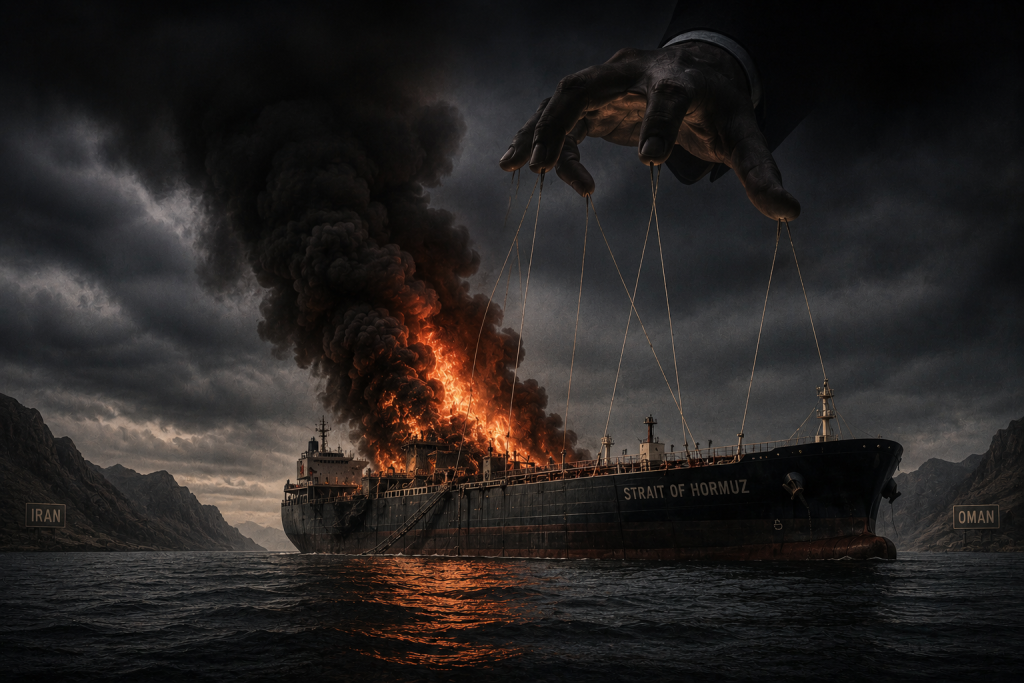
Two weeks ago, in Why People Are Going Crazy, I argued that today’s confusion and social fragmentation are not entirely accidental. What looks like chaos may also function as control. I pointed to two dynamics: the deliberate expansion of ambiguity across society, and the use of kompromat and coercion.
When people cannot agree on basic facts, they become paralyzed, divided, exhausted. They stop trusting institutions—and each other. Public life fractures into hostile tribes, each in its own reality.
So why not simply level with the public? What requires so much confusion to obscure?
I believe the answer lies in the accelerating decline of cheap energy.
The key phrase is not simply energy, but cheap energy—the foundation of the modern industrial world. The issue is not that oil disappears from the ground; it is that our economic system was built on abundant, inexpensive energy to support perpetual growth, expanding debt, and increasingly complex technological systems.
For more than a century, fossil fuels provided an enormous energy surplus. In effect, energy became the hidden asset underwriting modern finance, industrial expansion, globalization, and living standards. That surplus enabled the industrial and technological revolutions that shaped modern civilization.
The essay generated many comments, but one refined my thinking. Responding to someone who insisted that “oil and gas are abundant and we won’t run out as long as supply chains continue to function,” he offered a darker interpretation:
“Suppose it’s not true; suppose oil and gas are no longer abundant, and approximately half of the endowment has been produced (most of it simply burned). Do you think the real rulers of the world, via their think tanks, are unaware of this? They know. So their problem is how to ensure their own survival and at the same time ensure the survival of their controlling ideology… They are creating an artificial shortage… BEFORE the real shortage… becomes manifest.”
Think about it—if elites believe energy constraints are tightening, they would try to manage the transition in ways that preserve institutional stability and their own power at the same time.
Enter Energy Return on Investment (EROI): how much energy we obtain relative to what we invest to extract it. A century ago, conventional oil delivered roughly 100:1—one unit invested, one hundred returned. Today, many sources deliver far less; in some cases, below 5:1.
That decline matters because modern civilization depends not merely on energy, but on surplus energy. As more resources are consumed simply obtaining energy, less surplus remains available to support the broader economy, infrastructure, healthcare, technology, and social complexity.
Viewed through this lens, the current crisis is not merely financial or political. It is physical. Beneath the noise of culture wars, geopolitical conflict, and institutional distrust lies a deeper reality: the diminishing energetic foundation of industrial civilization itself.
The commenter understood something important. From this perspective, conflicts in the Middle East are not merely geopolitical struggles or policy failures. They may also function as mechanisms for managing decline—ways of acclimating populations to scarcity, restrictions, and instability before more severe energy constraints emerge on their own.
The Evidence from Art Berman
Art Berman is a petroleum geologist with four decades in the industry—20 years at BP (formerly Amoco) and another 20 as a consultant. A master’s from the Colorado School of Mines, he is a leading analyst of U.S. shale production and peak oil.
Recently, Berman appeared on Nate Hagens’ podcast, The Great Simplification, in an episode titled “A World on the Precipice: The Last Oil Tanker From the Strait of Hormuz Has Arrived — Now What?” There, he outlined the stark arithmetic underlying the current energy crisis.
Before the war, roughly 21 million barrels of oil and refined products moved through the Strait of Hormuz each day—an amount roughly equivalent to total daily U.S. petroleum consumption. According to Berman, that flow has now collapsed to near zero. Even accounting for alternative pipelines and rerouted exports, he estimates that approximately 11.5 million barrels per day have effectively been removed from global supply, or about 11% of the world total.
To grasp the scale of this disruption, consider the 1979 oil shock that followed the Iranian Revolution. That crisis triggered global panic, inflation, and recession despite involving a much smaller supply interruption than the one unfolding now.
Berman also notes that the final tankers that managed to transit the Strait before the conflict have already reached their destinations. The temporary buffers are disappearing. Even if a ceasefire were declared immediately, he argues it could take months for the hundreds of tankers stranded in or near the Gulf to be repositioned, reinspected, insured, and cleared for transit—assuming damaged infrastructure and naval mines can be dealt with quickly enough.
In the meantime, countries are increasingly relying on stored oil and strategic reserves to stabilize supply. The implication is unsettling: modern industrial economies are discovering how little slack actually exists within the global energy system once a major chokepoint fails.
Why the U.S. Is Not Immune
Many Americans assume the United States is insulated from a global energy shock because it is often described as a “net energy exporter.” But Art Berman argues that this framing is misleading.
Technically, the U.S. exports more total energy than it imports when measured in aggregate energy units such as BTUs. But that statistic obscures a critical detail: the country remains heavily dependent on imported crude oil—particularly heavy crude.
That distinction matters because much of the U.S. refining system was built around processing heavier grades of oil. These large, complex refineries are optimized to produce diesel fuel, jet fuel, and other industrial products from dense crude feedstocks. By contrast, the light oil produced by the American shale boom is better suited for gasoline and petrochemicals and yields comparatively less diesel.
As Berman bluntly puts it: “If we want diesel as a society, we have to import oil. Full stop.”
Diesel is not just another fuel. It is the foundation of the global physical economy: cargo ships, rail, long-haul trucking, agriculture, mining equipment—nearly every physical good depends on diesel somewhere along the chain. No scalable substitutes exist in the near term. So when diesel prices spike, the effects ripple through the economy: transportation rises, supply chains tighten, food prices increase, inflation spreads into everyday life.
Those pressures are already emerging. In parts of Asia, spot diesel prices have surged dramatically, reflecting growing stress within global fuel markets. The broader point Berman emphasizes is simple but profound: even countries that appear energy-rich remain deeply vulnerable to disruptions in the type and quality of fuel modern economies actually require.
A Crisis Within a Crisis: The “Artificial Shortage” Thesis
Returning to the reader’s comment, we can begin to see how the conflict in the Middle East may fit into a broader pattern. The commenter argued that elites are manufacturing an artificial shortage in order to acclimate populations to restrictions before a deeper, geologically driven energy decline fully arrives.
Art Berman would likely stop short of framing this as a deliberate conspiracy. But his analysis does support the broader premise that the world is approaching hard physical limits.
The era of cheap, abundant conventional oil appears to be ending. Much of the easiest and highest-quality oil has already been extracted. New discoveries tend to be smaller, deeper, more technically difficult, and more expensive to develop. The U.S. shale boom temporarily delayed this reality, but shale production comes with steep decline rates: wells lose output quickly and require constant drilling just to sustain output.
Even the Permian Basin—the engine of recent American oil growth—shows signs of strain. As Berman puts it: “We are not going back to 2025. We are not going back to oil being $70 a barrel.”
This distinction between financial expectations and physical reality is critical. Futures markets may continue pricing oil in the $70–$80 range for months ahead, but the physical market for delivered oil tells a different story during disruption. The result is a widening divide between abstract finance and the material conditions required to keep industrial economies running.
That gap is where confusion and ambiguity thrive. Official narratives may emphasize “stable markets” or “temporary volatility,” while households simultaneously experience rising transportation, food, and energy costs in daily life. People sense that something fundamental is changing, yet the explanations offered often feel fragmented, contradictory, or incomplete.
This energy reality increasingly shapes geopolitical strategy as well. In a recent essay, Gail Tverberg argued that many global conflicts and trade realignments make little sense unless they are viewed through the lens of energy constraints. In her view, leaders may no longer be trying to restore the highly globalized system of the past, but instead adapting to a world of tighter energy limits by shortening supply chains and regionalizing trade.
Whether intentional or emergent, the effect is similar: societies begin adjusting to lower energy availability through higher costs, reduced consumption, economic restructuring, and increasing forms of control. This is the deeper possibility raised by the commenter on my earlier essay—not simply that shortages are being manufactured, but that political and economic systems may already be attempting to manage an era of irreversible energetic decline.
This brings us to a seeming contradiction. The global push for artificial intelligence looks irrational from the perspective of shrinking energy abundance. AI requires enormous electricity, data centers, water, rare minerals, industrial infrastructure. If society is entering an era of declining surplus energy, why build one of the most energy-intensive technologies ever created?
But the contradiction may reveal the deeper logic of the system. As surplus energy declines, institutions become desperate for new forms of productivity, automation, and control capable of sustaining economic complexity with fewer real resources. AI promises exactly that: replacing labor, optimizing logistics and finance, and centralizing information management at unprecedented scale. At the same time, generative AI floods the information environment with synthetic media, endless content, and uncertainty, intensifying the ambiguity and fragmentation discussed earlier. AI may therefore be less a solution to the crisis of declining energy than a last attempt to preserve the existing system through computation, automation, and control even as its physical foundations begin to erode.
The Strategy Behind the Madness
This brings us back to the idea of ambiguity increasing. If political and economic institutions are attempting to manage a long-term contraction in living standards and energy availability, then much of the current social atmosphere begins to look less random and more functional.
First, the information environment saturates with noise. Every event politicized, every fact disputed, every narrative countered. Shared reality fragments.
Second, populations are kept chronically anxious and threat-focused. People become more reactive, more tribal—fixating on immediate enemies and short-term fears rather than structural questions.
Third, external crises—wars, sanctions, supply shocks—offer explanations for deteriorating conditions that are easier to communicate than physical limits. Scarcity can be framed as temporary and externally imposed, not structural.
Finally, the resulting instability justifies policies that might otherwise face resistance: rationing, surveillance, movement restrictions, centralized allocation.
Whether one sees this as intentional coordination or simply the adaptive behavior of institutions trying to preserve stability, the outcome is similar. A confused and exhausted public becomes more willing to accept emergency measures, especially when those measures are presented as responses to war, climate shocks, inflation, or national security threats rather than to the permanent decline of cheap energy itself.
The Real Shortage Is Already Here
Art Berman offers little reassurance about the near future. He argues that the United States is moving toward a significant energy crunch in which fuel prices rise to levels that strain ordinary households and businesses alike. Diesel shortages, in particular, would cascade through supply chains, increasing the cost of transportation, food, manufacturing, and nearly every physical good.
The underlying problem is that modern economies were built on the assumption of abundant surplus energy. For decades, industrial civilization expanded by drawing on concentrated fossil fuel reserves accumulated over millions of years. Economic growth, globalization, consumer abundance, and financial expansion all rested on that foundation.
The argument explored in this essay is that we may now be colliding with those limits.
The reader who commented on my earlier essay may therefore have identified something important. The current crisis may not simply be a temporary geopolitical conflict, but part of a broader transition into an era defined by tighter energy constraints and lower material growth. Whether this transition is being consciously managed, opportunistically exploited, or emerging chaotically from systemic pressures is ultimately difficult to know.
But the visible effects are increasingly hard to ignore: rising instability, declining trust, persistent economic stress, geopolitical conflict, and populations struggling to make sense of contradictory narratives in a world that feels progressively less stable.
The central issue is not that society runs out of oil overnight. It is that the age of abundant, cheap, high-return energy—the surplus that made modern industrial life possible—is beginning to fade. For decades, we lived on an enormous energy inheritance. Now the costs of maintaining the system are rising rapidly, and the political, financial, and psychological tensions of that transition have become inseparable from everyday life.
References
Nate Hagens (Host). (2026, May 13). A World on the Precipice: The Last Oil Tanker From the Strait of Hormuz Has Arrived — Now What? with Art Berman (No. 152) [Audio podcast episode]. In The Great Simplification. Available at: The Great Simplification
Charles Hall, Balogh, S., & Murphy, D. J. R. (2009). What Is the Minimum EROI That a Sustainable Society Must Have? Energies, 2(1), 25–47. Available at: MDPI Energies Journal Article
Gail Tverberg. (2026, May 12). China and US Trade Talks: A Solution for Oil Shortages? Our Finite World
Wendy Williamson. (2026). Why People Are Going Crazy. Available at: Wendy Williamson Substack
Note on EROI Data
The EROI figures discussed in this essay are drawn primarily from the work of Charles Hall and other researchers in biophysical economics. Exact estimates vary depending on methodology, resource quality, and system boundaries, but the broader trend identified across the literature is clear: the energy return from fossil fuel extraction has generally declined over time as producers move from large, easily accessible conventional reserves toward more energy-intensive sources such as deepwater drilling, tar sands, and shale oil.
If this work matters to you, please consider sharing it. And if you’d like to support my research and writing, paid subscriptions are available via Patreon, BuyMeACoffee, or Substack. Thank you for being here.


