


“But if thought corrupts language, language can also corrupt thought.” — George Orwell
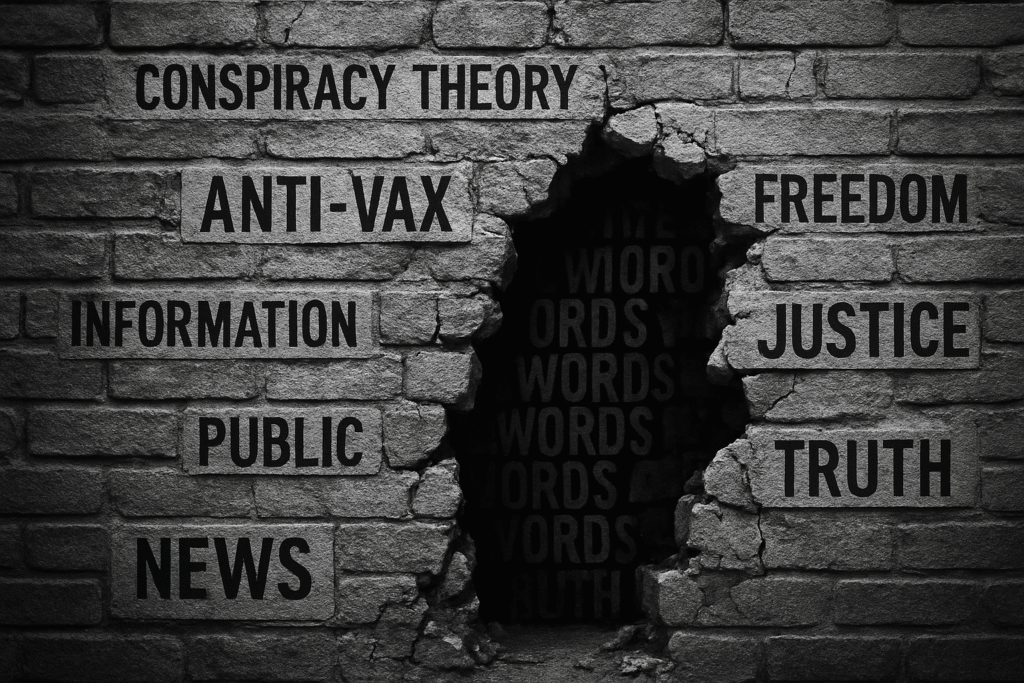
Over lunch with friends recently, I was reminded how profoundly words shape our reality. They don’t just describe what we think—they guide it, limit it, sometimes even replace it. Mid-conversation, someone casually used the phrase “conspiracy theory.” It felt like an opening into something deeper I’ve been calling the Law of Reversal, a theme I began exploring last week.
To explain, I turned to the metaphor of seasons. Humanity, I suggested, has lived through a long summer of growth, powered by fossil fuels that replaced human and animal labor with an extraordinary surplus of energy. But summers don’t last forever. As easy energy wanes, debt has quietly filled the gap. Expansion contracts; growth trembles under depletion. This is autumn—a season of reckoning, not only economic but cultural and spiritual.
Of course, my words weren’t so polished over lunch. My friends probably heard me as “negative.” Silence followed, as it often does when I speak of cycles, limits, or decline. Many today treat uncomfortable truths as dangerous in themselves. But life is not perpetual summer. Its beauty comes from rhythm—ups and downs, feasts and famines, joys and sorrows. To deny this is to deny reality itself.
My pastor friend gently redirected: “The Lord doesn’t want us to think as the world does. He chooses some to spread the truth.”
I knew what he meant, but for me, truth is not escape from seasons—it is their recognition. The Bible itself affirms cycles: Joseph interprets Pharaoh’s dream as seven years of plenty followed by seven years of famine (Genesis 41). That story is more than history; it’s a parable for us. What rises must fall. What flourishes must eventually fade. Yet modern culture clings to endless growth, treating decline as if it were unnatural.
The same denial extends to pain. Pain is not an error. It is a teacher. It prunes, sharpens, clears ground for renewal—like winter preparing spring. In my own life, pain has done exactly that. Physical pain forced me to care for my body. Emotional pain taught me resilience and compassion. These lessons were not mistakes—they were gifts.
And so I began experimenting with discomfort in small ways. Several weeks ago, I made what seems like a small but big change: I got rid of my king-sized bed and started sleeping on the floor. It’s not glamorous. It’s not even comfortable yet. But it has shifted my room from a place of collapse into a space of training, discipline, and growth. It reminds me daily: comfort is not the highest goal. Transformation requires struggle.
This principle isn’t limited to bedrooms. Cultures across the world design environments to shape consciousness. A Japanese tatami room fosters clarity through simplicity. European plazas invite community. In contrast, much of modern America isolates us—sealed in cars, moving from one parking lot to another. Spaces shape us, whether we notice or not.
And words are no different. They are not neutral carriers of meaning; they are architects of thought. Music lyrics, slogans, headlines—they slip into us, framing our inner world before we realize it. Words make worlds. They build sanctuaries, or prisons.
Nowhere is this clearer than in the media. Its business is not information but emotion. Even the word itself reveals this: in > form > motion. To “inform” is literally to “put into form” and move us. What we consume doesn’t just tell us something—it shapes and steers us.
Why do we watch movies? To feel. Why do we buy? To feel. Emotion is the currency of persuasion. Information without feeling is inert; emotion animates it into action.
Psychologists like Antonio Damasio have shown that without emotion, decision-making collapses. Feelings aren’t distractions from thought; they are the bridge between thought and action. Which is why modern media doesn’t simply report—it ignites. It knows that outrage, fear, and desire move us faster than facts ever could.
This is not new. Orwell warned of Newspeak, a vocabulary engineered to make rebellion unthinkable. Bernays, the father of public relations, showed how repetition and symbolism could make ideas feel inevitable. Propaganda regimes mastered the same playbook: strip words of nuance, charge them with emotion, and weaponize them.
After a recent political assassination, social feeds exploded. People who had been silent for years suddenly had something to say. Not because a new “fact” had emerged inconsequentially, but because fear, anger, and outrage lit a fire. Emotion mobilized the masses in ways raw data never could.
Words are bent in different ways, and each distortion shapes thought differently. Some are weaponized into labels that shut down inquiry. Others fracture into competing meanings across political tribes. Still others are quietly redefined, shifting their boundaries until debates change without anyone noticing.
Take conspiracy theory. Literally, it means a proposed explanation involving a secret harmful plan. Nothing extraordinary there. But since the late 1960s, the phrase has been repurposed as a cudgel—a synonym for “crazy, delusional, not worth considering.” A single label now silences inquiry. That is propaganda in miniature: ridicule baked into the word itself.
The same tactic shows up in the term anti-vax. Originally descriptive, it now gets extrapolated into a caricature: someone irrationally opposed to all vaccines, selfishly endangering others. In reality, many labeled “anti-vax” simply questioned the new COVID-19 vaccines—especially after public health agencies deliberately revised the very definition of “vaccine” just before rollout. A term once neutral has been turned into a weapon: a shortcut to discredit rather than discuss.
Other words fracture in a different way. They don’t silence so much as split meaning across political tribes. To the Left, “freedom” often means liberation from oppression or poverty; to the Right, it means freedom from government interference. “Justice” points one way toward dismantling systemic barriers, another toward strict accountability under law. Even “patriotism,” “truth,” and “safety” fracture—summoning pride or suspicion, security or control, depending on who speaks them. This is why debate so often collapses. We think we are arguing over ideas, but we are actually living inside different dictionaries.
And still another manipulation is quieter: redefining words in ways that shift the ground beneath us. “Disinformation” and “misinformation” once meant falsehoods, but now often stretch to mean information that challenges authority or arrives before the official story is settled. “Science,” once a method of testing and revising ideas, has hardened into “the science”—a slogan meant to end questions rather than encourage them. “Equity” has replaced “equality” in much public discourse, quietly moving the goal from equal opportunity to engineered outcomes. Even “tolerance” has shifted: once meaning respectful coexistence, it now often demands full celebration of what one may personally disagree with. These redefinitions are harder to spot, but their effect is just as profound: they move boundaries of thought without anyone realizing the fence posts have been moved.
That lunch with friends reminded me: reclaiming dialogue requires more than sharper arguments. It requires attentiveness—listening beneath words to the worlds they carry.
When words are twisted and images engineered to hijack our emotions, the antidote is not louder shouting but clearer seeing. Define terms carefully. Expose hidden frames. Shape our spaces, both physical and linguistic, with intention.
That is what I am practicing. Stripping away clutter—of objects, of language, of illusions—and choosing words, spaces, and images that serve life, not manipulation.
If manipulation is the cultural default, awareness is the reversal. And awareness requires discipline: to face pain, to notice cycles, to reclaim language.
This is the season I am stepping into—not as a victim of spin, but as a builder and watchman. The words I choose, the spaces I inhabit, the images I allow into my mind—these are not trivial. They are foundations. They are the architecture of my future.
And they can be yours too.
If this resonated with you, I’d love to have you along for the journey. You can support through Patreon, BuyMeACoffee, or Substack, where I share more reflections. Or subscribe at WendyWilliamson.com for my independent blog. Every contribution helps—and knowing these words speak to you matters most of all.


 “Outstanding, sophisticated, and mesmerizing…a spiritual intrigue similar to Dan Brown’s The Da Vinci Code.” —ForeWord Reviews